'The Smashing Machine' is an Emotionally Moving Smash Hit
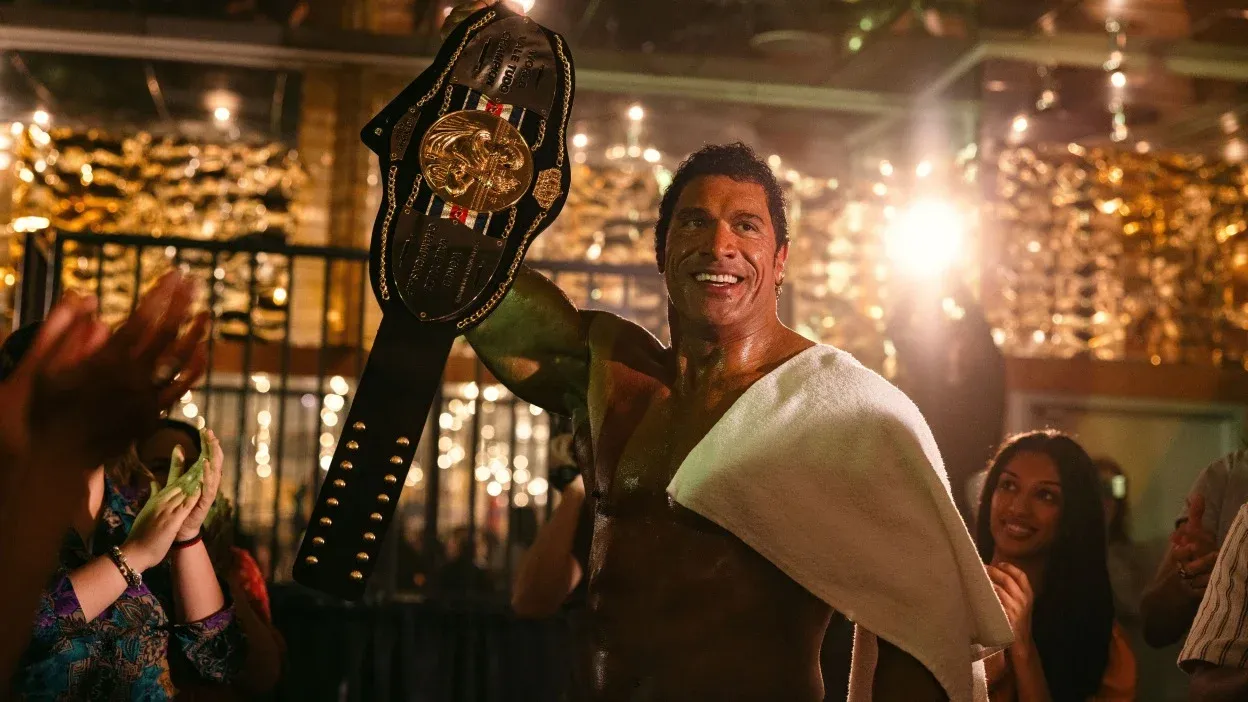
The Smashing Machine is a biographical drama following UFC fighter Mark Kerr (Dwayne "The Rock" Johnson) and directed by Bennie Safdie. Benny Safdie is best known for his collaborations with his brother, such as Good Time (2017) and Uncut Gems (2019). From these films, the brothers established a reputation for rapid-paced, unpredictable, and chaotic storytelling. Benny took a left turn in his directorial career when in 2024 it was announced that him and his brother would be pursuing solo directorial careers. An open question going into this film is how the brothers' directorial styles would diverge and what niche this Safdie would fill.
This film also stands as a turning point in Johnson's acting career. It has been reported that Johnson famously has a "no-lose" clause in his contracts that stipulates that if he were ever to take a role, that character mustn't lose a fight. An actor's public image can be a fickle thing, so maintaining a fragile tough-guy persona has paid dividends for The Rock, as he was the the highest paid actor in 6 of the past 10 years. However, this film is a turning point for the successful former wrestler with a seemingly limitless ability to act in infinite derivations of the same action comedy. The Smashing Machine isn't a typical The Rock movie. It's not a comedy, and for a movie about fighting, it is more moody and melancholic than exciting. I come from a wrestling background (greco-roman, not performative), and knowing the story of Mark Kerr's life, I was particularly excited for this film.
The Smashing Machine follows Mark Kerr's struggles with a tumultuous fighting career, a drug addiction, and a turbulent relationship. The film opens with Kerr in his most dominant form at a fight in Brazil, taking his opponents to the ground and demonstrating why he is called The Smashing Machine. Played over the smashing is an interview, where the impression is given that Mark only knows winning and that loss is a foreign concept to him. As the film progresses, we see Mark abusing painkillers as he goes through the motions at home with his girlfriend, Dawn (Emily Blunt) and while preparing for a fight in Japan. It's in Japan where Mark gets into a fight with Dawn and loses his fight. This is the defeat that breaks the man, causing his drug addiction to spiral out of control and his self destructive tendencies to test his relationship. Mark continues to battle his addiction, relationship tensions, and the pressure of the biggest fighting tournament in his career.
This movie excels in subverting expectations for what a sports biopic in the early days of the UFC would be. You would expect a man with the nickname of The Smashing Machine would be brutal and violent in all aspects of his life. Johnson plays Kerr as physically larger than life, but personally gentle and soft-spoken. An image remains burned in my mind of Kerr's great friend, Mark Coleman (Ryan Bader), consoling him after his overdose. Mark Kerr, the hulking mass of testosterone hides his face in a hospital blanket and sobs that he doesn't want to die. I also anticipated Kerr's acquaintances, coach, and opponents to also embody that crass masculinity that the McGregors and Stricklands of the current UFC showcase, but they are all so polite, caring, and restrained. It was so refreshing to see this depiction of a fighter, and it was an intriguing dissonance to see play out on screen.
Mark's struggles with his career, his relationship, and his addiction provoked a question on the role of identity in one's success. Mark's identity was that of a winning and desirable man that existed beyond the plane of negative emotions. When he's brought face-to-face with loss, a toxic relationship, and the consequences of self-destruction, Mark doesn't know who he is anymore. It's out of this near-death experience that he has the opportunity to rise out of the ashes, with some superb support from his friends and coach (Bas Rutten). It's through a new identity, as an emotionally dependable man that is more than his ability to physically dominate another person, that he is able to find hope and a more resilient purpose.
As far as performances go, I want to give credit to the cast of fighters. All of the fighters and coaches were all real-life fighters, and I was incredibly impressed with their ability to bring their characters to life in a way that only they would know how to. I was also blown away by Johnson’s performance. First off, the hair and makeup was spot on, there were moments where I didn’t recognize him as The Rock and it felt like he truly became Mark Kerr. Secondly, Johnson shows some tremendous range in this film that I haven’t seen him portray in any other movie. I think it is telling that Johnson took a role where the character’s inciting event is a loss, proving that he brings much more to the big screen than muscles and laughter.
In The Smashing Machine, Benny Safdie certainly proves his solo directorial capabilities. It feels like Benny Safdie is carving out a niche in hyperrealistic, emotionally character-driven stories while his brother doubles down on the chaotic storytelling that brought them to prominence. The film's true achievement, however, is not its success in the fight scenes or as a sports biopic. Where the movie excels is in showing how a man who previously built his life on his dominance is shown as emotionally fragile, socially dependent, and able to rebuild himself despite his struggles.